2026 How to Choose the Best Garbage Totes for Your Needs?
Choosing the right garbage totes is crucial for effective waste management. Experts like Mike Turner, a well-regarded waste management consultant, emphasize, "The right garbage totes can make a significant difference in managing waste efficiently." Understanding your needs is vital.
Garbage totes come in various sizes, materials, and designs. It can be overwhelming to select the best one for your situation. For instance, a family home may require larger, more durable totes, while a small apartment may benefit from compact, lightweight options.
Reflecting on your waste disposal habits is important. People often underestimate the impact of size and material on their overall waste management strategy. Choosing poorly can lead to overflows or inadequate waste containment. Think about how frequently you generate waste and adjust your choice accordingly. The right garbage totes will not only streamline your disposal process but also enhance your overall household or business efficiency.
Understanding Your Waste Management Needs
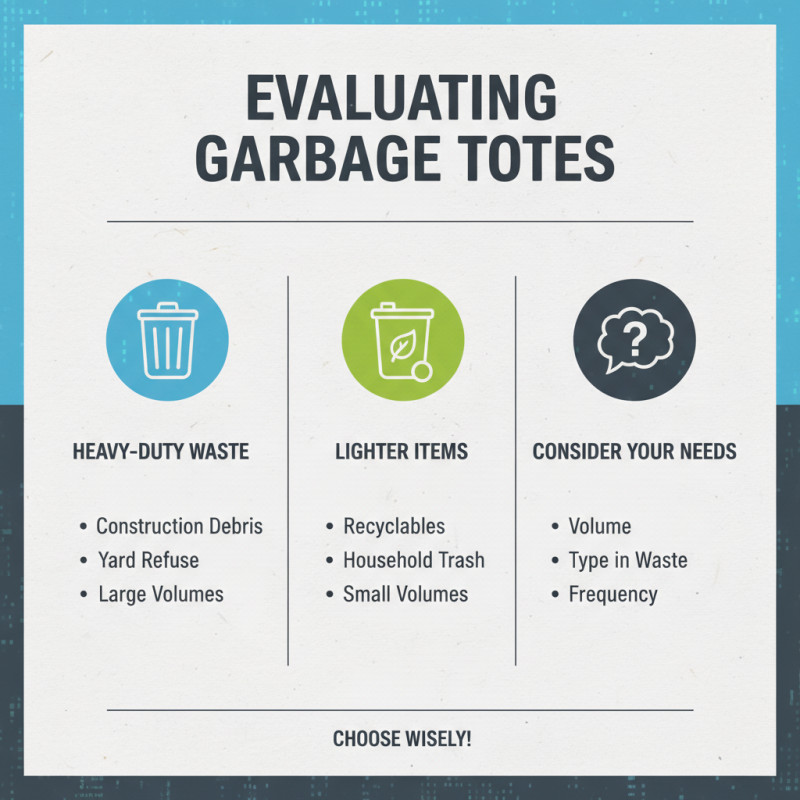
Understanding your waste management needs is crucial for selecting the right garbage totes. According to the Environmental Protection Agency (EPA), the U.S. generated approximately 292.4 million tons of trash in 2018. This figure has been steadily increasing, highlighting the importance of efficient waste management solutions. Knowing the type and volume of waste you produce is essential. Household waste, recyclables, and yard debris all require different management strategies.
When choosing garbage totes, consider your specific waste types. For example, composting organic waste can reduce landfill contributions by up to 30%. Selecting a tote designed for compost will help in this effort. Larger totes are beneficial for families or businesses producing substantial waste. A tote with a secure lid can prevent pests from accessing your waste, which is crucial for maintaining hygiene.
**Tips:**
- Assess your waste types. Separate recyclables from organic waste.
- Consider tote size based on your weekly waste output.
- Choose totes with durable materials for longevity.
Reflect on your habits as well. Are you generating more waste than necessary? The need for smaller, more manageable totes could indicate an opportunity to reduce overall waste. Consider analyzing your consumption patterns to identify ways to cut down on waste generation.
Factors to Consider When Choosing Garbage Totes
Choosing the right garbage tote can be daunting. There are several factors to consider. One important aspect is the size. A larger container is often necessary for big families. Conversely, smaller totes work well for individuals or couples. Think about typical waste production to avoid over or under-purchasing.
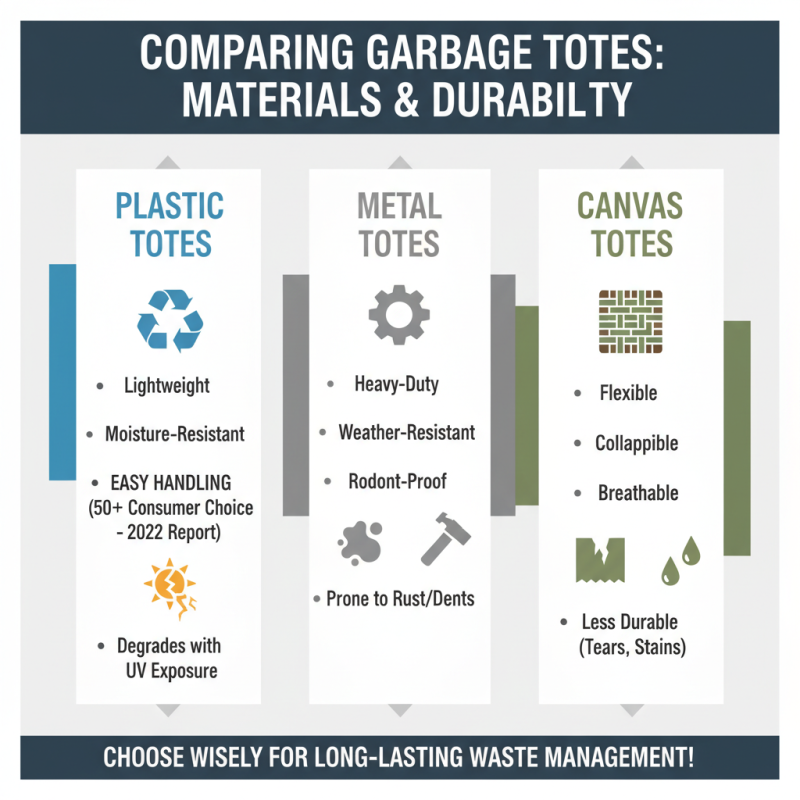
Material matters too. Some totes are made from plastic, while others are metal. Plastic is lightweight but can wear out quickly. Metal, on the other hand, is durable. It withstands various weather conditions. However, metal can be heavier and more expensive. It’s essential to weigh these pros and cons before deciding.
Consider the ease of use. Some totes have wheels for easy maneuverability while others do not. A tote without wheels can be challenging if filled with heavy items. Look for features like a secure lid to keep odors contained and pests away. Reflect on your habits and space limitations, ensuring the tote meets your specific needs.
Comparing Materials and Durability of Garbage Totes
When selecting garbage totes, material and durability are key factors. Many options are available, including plastic, metal, and canvas. Plastic totes are lightweight and resistant to moisture, making them a popular choice. According to a 2022 industry report, over 50% of consumers prefer plastic for their ease of handling. However, they can degrade under UV exposure, leading to reduced lifespan.
Metal totes offer heightened durability, often lasting longer than plastic. They resist rust and wear, but their weight can be a drawback. For instance, a study published by the Waste Management Association noted that metal totes can last up to 20 years in optimal conditions, but they require proper maintenance to prevent damage from corrosion. Consider your environment; extreme temperatures can affect both materials differently.
**Tip:** Always assess the location for the garbage tote. If it’s outdoors, UV-resistant materials may be a necessity.
Canvas totes, while less common, can be a sustainable choice. They are reusable and often made from recycled materials. However, they are less durable in wet conditions. It’s worth reflecting on how often you need to replace your totes. Frequent replacements can indicate a mismatch between material choice and environmental conditions.
**Tip:** Evaluate how much weight the tote needs to carry. Heavier materials may require sturdier options to avoid wear.
Budgeting for Your Garbage Tote Investment
Budgeting for a garbage tote investment requires thoughtful consideration. An ideal garbage tote should meet your capacity needs while staying within your budget.
Start by assessing your waste production. A small household may only need a 32-gallon tote, while larger families might require 64 gallons or more. The tote’s size affects its price significantly.
When planning your budget, consider additional costs. Delivery fees and maintenance can add up. Some totes have unique features like odor control or pest resistance. These can be more expensive but might save money in the long run. Reflect on your lifestyle and waste management habits. Investing in a durable tote can lead to long-term savings and less hassle.
Don’t forget about potential waste reduction strategies. Implementing recycling and composting can lessen the burden on your garbage tote. A smaller tote may encourage more responsible disposal practices. Evaluate your choices carefully. The right tote should align with both your financial and environmental goals.